






Weighting of social value benefits in £5m+ central government procurements to be increased to minimum 20%
- Details
In-scope organisations will have to apply a minimum 20% weighting to criteria set out in the Government’s revised social value model for all central government contracts valued at £5m or above from next year, the Cabinet Office has announced.
In a public procurement note (PPN 026) it said that for contracts valued at £1m and above, but less than £5m, in-scope organisations would have to apply a minimum 10% weighting (or equivalent measurement).
The social value model, which is set out as an annex to the PPN, will “prioritise British jobs, skills, and opportunities for people facing barriers to employment within our local communities”. It is split into two outcomes, (1) Good jobs and (2) Skills, with six award criteria.
The new rules will apply to central government procurements commenced on or after 1 January 2027 following the publication of detailed technical guidance in the Autumn. A procurement is considered to have commenced at the point at which a tender notice is published.
The PPN applies only to central government departments, their executive agencies and non-departmental public bodies ('in-scope organisations').

Other public sector contracting authorities may wish to adopt the approach set out in the policy note, the Cabinet Office said.
First Secretary of State Louise Haigh said: “Every pound of taxpayer money should be spent in a way that benefits local communities - creating good jobs and giving young people the skills they need for the future.
“For too long, securing government contracts has been a tick box exercise that fails to deliver the positive change that people feel in their pocket and see in the places they live.
“We are doing things differently. These new rules will ensure the £90 billion that is spent each year through government contracts supports British jobs, skills and people in every postcode.”
Peter Ware, Partner in procurement and Head of Government at Browne Jacobson, said: “This intervention reflects the significant weight that public sector procurement carries in the national and local economy, and the new Prime Minister’s commitment to leveraging greater social value from government contracts.
“This continues a trajectory that has been in motion since the Procurement Act 2023 was implemented in February 2025, and strengthened by the Procurement Policy Note 024 guidance published by the Cabinet Office in June this year, which introduced a mandatory public interest for contracts exceeding £1m that must consider key economic and social considerations.
“What is different, though, is the government’s eagerness to give procurement such prominence in its policy agenda under Andy Burnham, who has made tackling the youth unemployment and economic inactivity crisis one of his defining missions."
Ware added: “This should therefore focus minds among not only contracting authorities but also businesses that hope to win high-value public sector work. They will need to demonstrate tangible ways in which they are creating jobs and work experience opportunities, and upskilling or reskilling the existing workforce locally.
“Businesses should also take note of Whitehall’s focus on deeper devolution, with skills budgets set to be controlled by strategic authorities where these exist. This provides a great opportunity for employers to work closely with mayors on to access skills funding when rolling out new training initiatives.”
Sponsored articles


Walker Morris supports Tower Hamlets Council in first known Remediation Contribution Order application issued by local authority
Jobs






















Paralegal

Litigation Lawyer

Local Government Lawyer - Commercial Property

Chief Lawyer - Contracts
Locums
Directory




Events

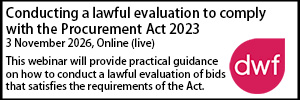
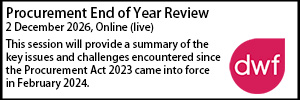

14-10-2026 4:00 pm
20-10-2026 2:00 pm
03-11-2026 12:00 pm
18-11-2026 11:00 am
19-11-2026 12:00 pm
24-11-2026 12:00 pm
01-12-2026
01-12-2026 12:00 pm
To Be Confirmed
To Be Confirmed
To Be Confirmed
To Be Confirmed
