Public Sector High Court Litigation in 2025: Key trends so far
- Details
Tom Whittaker provides insights on trends in public sector litigation for the first half of 2025, including why local authorities are bringing fewer claims.
Earlier this year we published Navigating Public Sector High Court Litigation in England and Wales, an in-depth report looking at public sector litigation trends in partnership with Solomonic, examining over 8,000 cases from 2014 to mid-2025.
Understanding these trends is useful for public sector leaders, suppliers, and legal teams seeking to manage risk and respond proactively to a changing litigation landscape.
Six months on, the landscape continues to evolve. In this update, we highlight four key insights from refreshed data for the first half of 2025—insights that matter for anyone navigating an increasingly complex litigation environment.
Combining data and legal expertise in this way is a powerful generator of insights. Want to know more? Contact us using the details below.
Trend 1: Claim volume is rising
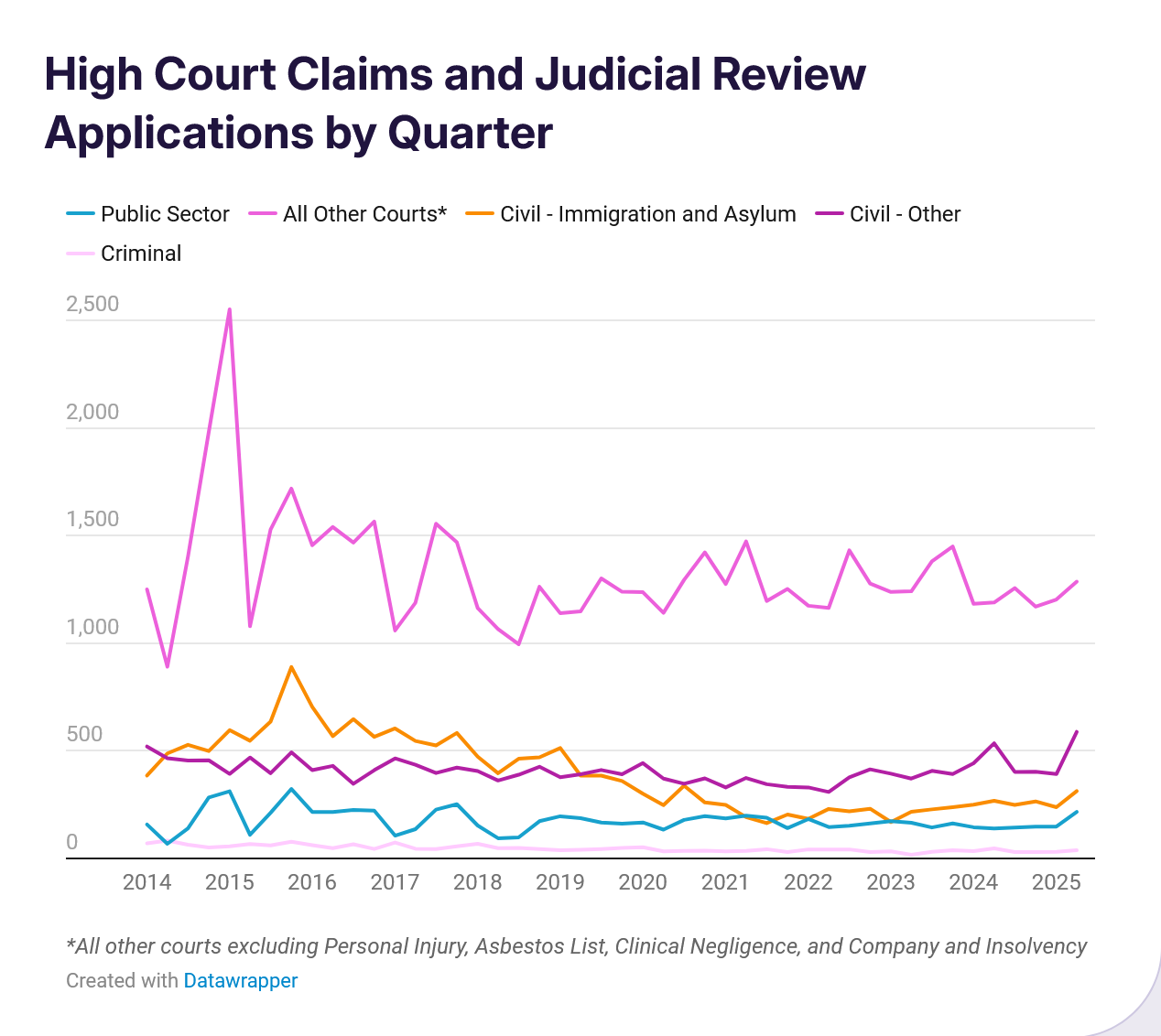
Public sector litigation claims up 11% in H1 2025 compared to recent years.
Overall claim volume has increased in Q2 2025 for all types of litigation, including Public Sector High Court Litigation, other High Court Litigation, and Judicial Reviews.
The average public sector claim volume for H1 during 2020–2024 was 327 claims. In 2025, it rose to 364 claims, an increase of 11% over the prior average. This increase mirrors trends in other civil claims, and may reflect broader macroeconomic factors, including the long-term impact of the Covid-19 pandemic.
Why it matters: Organisations may face greater scrutiny and a higher risk of disputes. Proactive risk management and early legal advice are more important than ever.
Trend 2: Public sector organisations are more likely to be defendants
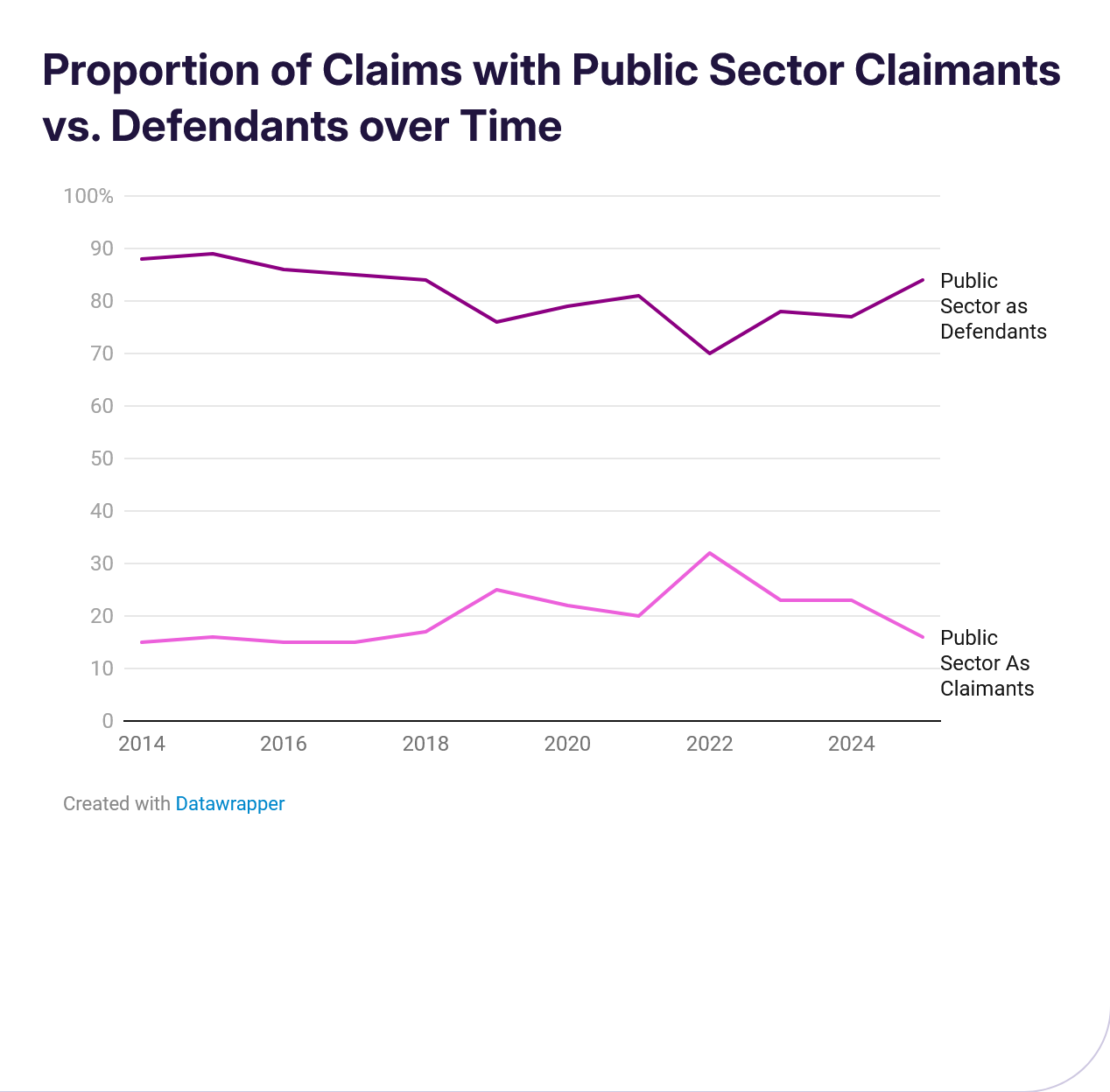
Since 2019, public sector bodies are increasingly in the defendant’s seat.
The data shows that from 2014 to 2018, the proportion of cases where a public sector organisation was a claimant or defendant was relatively steady.
Since 2019, however, there has been an increase in the proportion of claims where the public sector organisation is the defendant. The most recent data (unless a temporary blip) suggests that the proportion of claims as claimant or defendant may be returning to 2014-2018 levels.
Again, it is difficult to know the cause of these trends. Macroeconomic issues such as the Covid-19 pandemic and their long-term consequences may have impacted the type of litigation being bought and when. However, the data does indicate that the likely practical impact is for public sector organisations to be increasingly finding themselves as defendants (or bringing fewer claims).
Why it matters: This shift may signal changing attitudes towards public accountability and dispute resolution. Public bodies should review their dispute resolution strategies and ensure robust processes for defending claims.
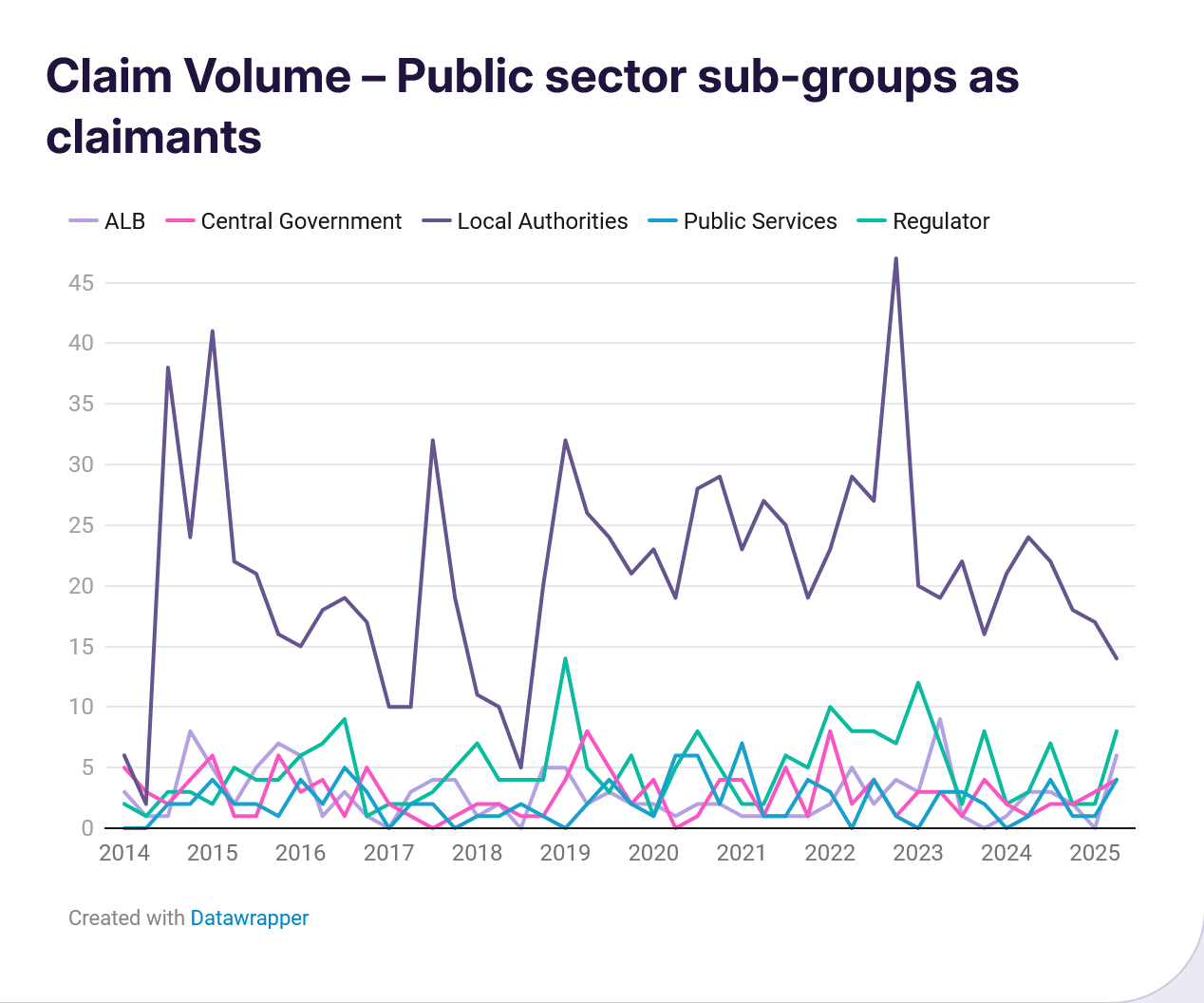
Trend 3: Local authorities are bringing fewer claims
Local authorities step back: Fewer claims initiated in 2024 and 2025.
Whilst the data shows the public sector increasingly acts as defendant, and decreasingly so as claimant, the data shows that is not consistently the case by different types of public sector organisations.
First, in 2024 and 2025, where public sector organisations are claimants, Local Authorities have been bringing fewer claims compared to the period in 2019-2023.
In contrast, all other types of Public Sector organisations have seen a small increase in claims in the 2025 Q2 but at overall low levels consistent over the last 10 years.
Why it matters: This may reflect budgetary pressures, policy changes, or a shift in approach to resolving disputes outside the courts.
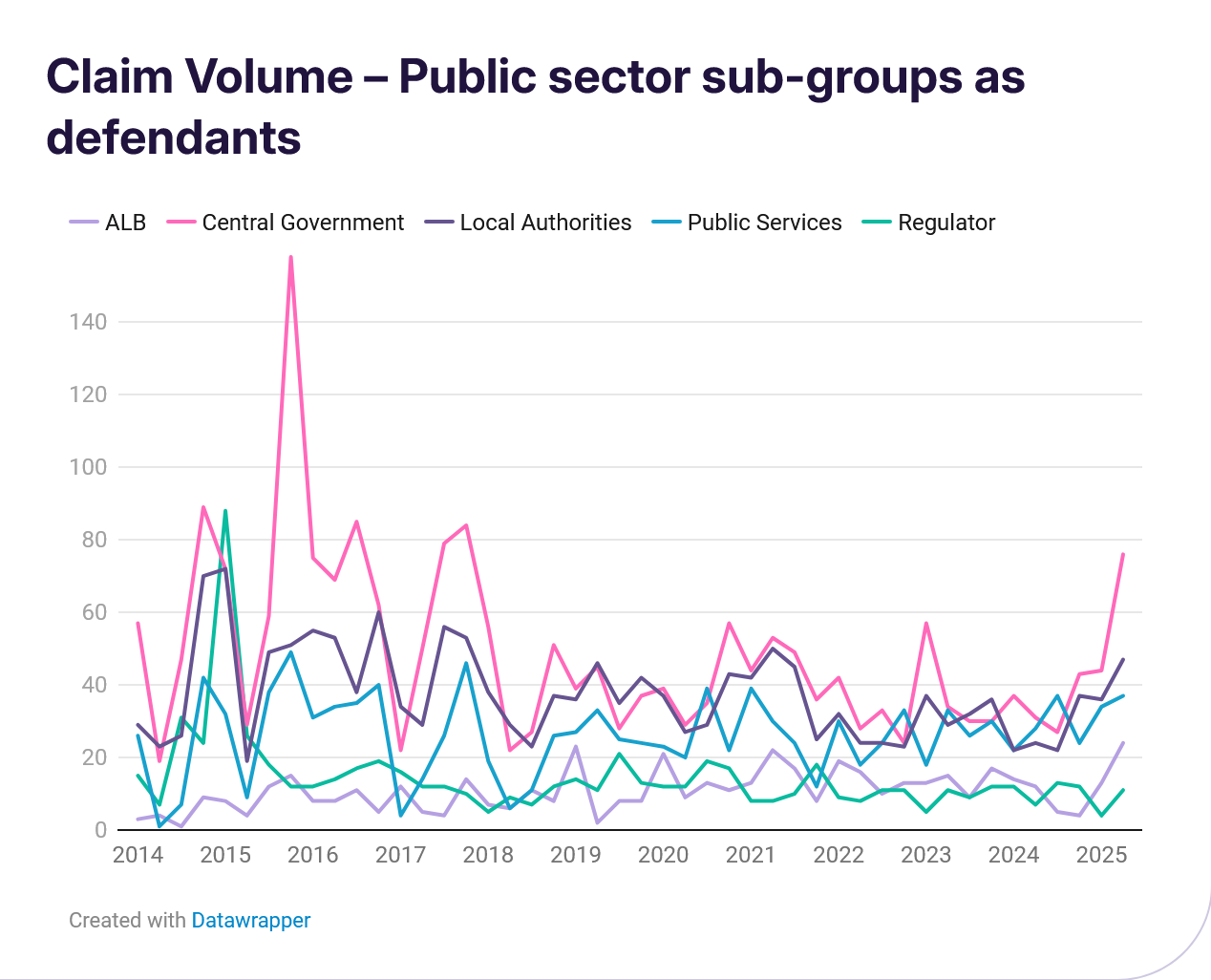
Trend 4: Defendant cases on the rise across all public sector organisations
All public sector types face more claims as defendants, with central government seeing the sharpest rise.
Unlike cases where Public Sector organisations act as claimants, the data shows that all types of Public Sector bodies have experienced an increase in cases where they are defendants over the past one to two years. For some organisations, this rise remains within the usual range seen in previous years.
For example, Public Services has seen an increase but to similar levels seen before. In contrast, cases where Central Government has been defendant have increased notably in the first half of 2025.
Why it matters: Organisations should assess their exposure and consider whether additional support or resources are needed to manage litigation risk.
Looking ahead
- What’s driving these changes? Policy shifts, economic pressures, and evolving public expectations all play a role.
- What should you do? Consider benchmarking your organisation against sector trends, reviewing your dispute management processes, and seeking expert advice where needed.
Using court data analysis can help you understand your organisation’s caseload or specific cases. Contact us to discuss how these developments may affect your organisation and for tailored insights.
Methodology
For the methodology, please see the full Navigating Public Sector High Court Litigation in England and Wales 10 Year Report, available here.
Tom Whittaker is Director, Head of AI (Advisory) at Burges Salmon.
Jobs











Litigation Lawyer

Principal Lawyer
Locums
Directory