Thinktank calls for setting up of neighbourhood boards with 50% or more community representation if reorganisation goes ahead
- Details
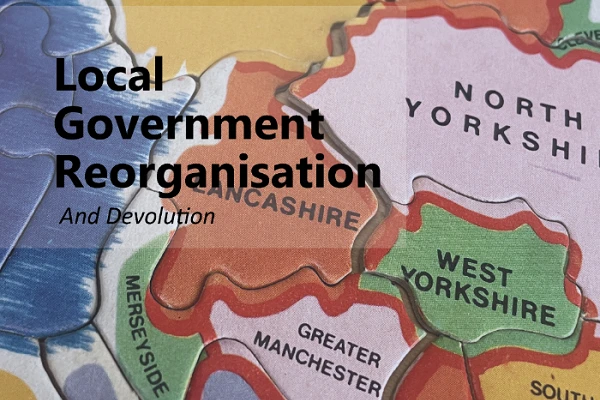
Neighbourhood boards that are “inclusive, empowered and well-resourced” and have 50% or more community representation should be established if local government reorganisation goes ahead, a leading thinktank has argued amid concerns at the impact of unitarisation on local democracy, representation and community voice.
In a report, Making the most of it: Unitarisation, hyperlocal democratic renewal and community empowerment, the Institute for Public Policy Research North (IPPR North) said: “In the same way that mayors will be granted the right to request powers from central government, communities themselves – in the form of hyperlocal councils and newly established neighbourhood boards – should have the right to request powers from unitary and strategic authorities.”
IPPR North also called for the adoption of "bold" participatory democratic practices, saying: “For councillors, the government should legislate to enable remote, digital voting. For the public, councils should increasingly use approaches such as co-production, participatory budgeting and citizens’ assemblies as new default ways of working.”

In addition the report suggested that hyperlocal councils be reformed and expanded to ensure democracy is “within walking distance”.
IPPR North noted that England already has some of the largest councils by population and the fewest councillors per resident in Europe.
The Government’s plans to abolish district councils and create new, much larger unitary councils would increase the population per council size four‑fold, from the current average of 115,000 to a likely 500,000, it added.
However, IPPR North said: “Local government reorganisation need not result in a weakening of democracy at the local level….

“While proposals to simplify governance and support mayoral devolution have been broadly welcomed, the planned abolition of remaining district councils – affecting around 29 per cent of England’s population – has resulted in concerns about the future of local democracy, representation and community voice.
“However, unitarisation presents a rare opportunity for democratic renewal at the local level if accompanied by intentional reforms.”
IPPR North research fellow, Dr Ryan Swift said: “Devolution across England represents a once in a generation opportunity to renew local democracy. There are fears that merging councils into larger unitary authorities could put this at risk.
“But if devolution and local government reorganisation is accompanied by a deliberate commitment to community-led, participatory governance it can become a catalyst for genuine community empowerment and local democratic renewal.
“There is no choice but for devolution to work.”
Jobs


Assistant Director of Legal and Governance
Locums
Directory